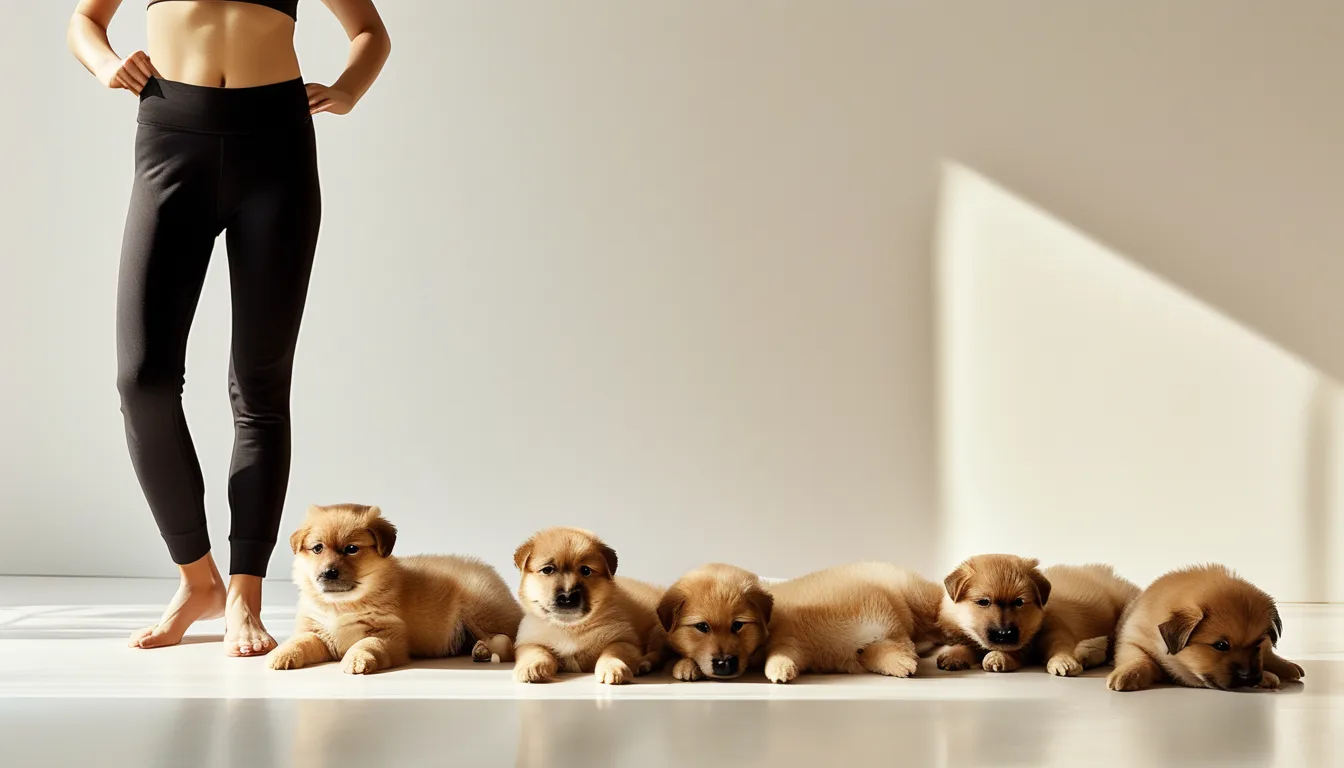
What to Wear When the Whelping Room Gets Cold in Fall
Quick Answer: Dress in thin layers you can shed, not one warm piece. The whelping room stays at 75-85F for the puppies while the rest of your house drops into the 60s, so you’ll be crossing a 20-degree line dozens of times a day.
The first cold snap always catches you out. You put on the sweatshirt that made sense in the hallway, kneel down beside the box, and ten minutes later you’re overheating with a hand under a heat lamp.
The problem isn’t the temperature. It’s the transition, and it happens forty times a day.

Why does the whelping room feel so much worse in fall than in summer?
In summer, your house and the whelping room are roughly the same temperature, so you dress once. In fall, you create a 20-25 degree gradient between rooms and then walk through it constantly.
Newborn puppies can’t regulate their own temperature for the first two weeks, so the box stays at 85F for week one and steps down toward 75F by week four. Meanwhile you’re running the house at 65-68F to save on heating.
Every check means going from cool to hot and back. Your body never settles, and the sweat you build in the warm room turns clammy the moment you step out — which is what actually makes you feel cold and miserable.
What layering actually works for this?
Think in three thin layers rather than two thick ones. The goal is being able to change your insulation in under five seconds, one-handed, without leaving the room.
- Base: a thin, close-fitting long sleeve in a fabric that moves moisture. This is the layer you’ll be down to inside the box room.
- Mid: a light zip or button front. Zip is the key detail — you can vent it at the neck without taking it off while holding a puppy.
- Outer: something you leave hanging on a hook outside the room, not on your body. Grab it for the hallway, drop it before you kneel down.
Avoid pullover hoodies entirely during whelping season. Anything you have to take off over your head is a problem when your hands are occupied or dirty.
5 Mistakes Everyone Makes in a Warm Whelping Room
- Wearing fleece. It traps heat brilliantly and vents almost nothing. You’ll be soaked in 15 minutes and chilled for the next two hours.
- Dressing for the hallway. You’ll be in the warm room far longer than the cold one. Dress for 80F and carry the rest.
- Heavy socks with slippers. Your feet overheat near floor-level heat sources faster than the rest of you. Thin socks, and keep a second dry pair nearby.
- Long loose sleeves. They drag in the box, catch on the heat lamp cord, and pick up everything. Push-up sleeves or three-quarter length solve it.
- Ignoring the 3 a.m. check. The house is coldest and you’re least alert. Lay out your layers by the door before bed so you’re not choosing while half asleep.

How do you handle the constant washing?
Fall whelping means more laundry, not less — you’re sweating into layers and the puppies are producing everything they produce. Plan on two full base-layer changes a day through week three.
Buy in multiples of the same thing. Five identical thin long sleeves beat five different tops, because you never have to think about what pairs with what at 3 a.m., and they all wash on the same cycle.
Wash warm rather than hot to protect elastane, and skip fabric softener — it coats fibers and kills the moisture-moving property that makes a base layer worth wearing. If something needs sanitizing after a rough night, that’s what a longer wash time is for, not higher heat.
What nobody tells you about the transition itself
Everyone plans their clothing for the warm room. Almost nobody plans for the five minutes after they leave it, which is when the discomfort actually lands.
You come out damp, hit a 65F hallway, and the evaporation pulls heat off you fast. That’s the chill people blame on the house being cold when the real cause is the sweat they built up two rooms over.
The fix is a habit, not a garment: dry off before you cool down. Keep a small towel by the door and give your neck and forearms a quick pass on the way out. It sounds trivial and it changes the entire experience of a long whelping week.
The second thing nobody mentions is footwear. Slip-on shoes you can leave at the threshold keep the room cleaner and stop your feet from cooking during a 40-minute check.
FAQ: Fall Whelping Room Clothing Questions, Answered
How warm does the room actually need to be?
Around 85F for the first week, stepping down roughly 5 degrees a week until you reach about 72-75F by week four. Check with a thermometer at box level, not on the wall — the difference between the two is often 6-8 degrees.
Can I just heat the box and keep the room cool?
A heat lamp or pad over part of the box is the standard approach and it does let you keep the room cooler than 85F. But drafts matter more than average temperature for newborns, so a cool room with a hot spot still needs to be draft-free at floor level.
What about knee comfort on a cold floor?
A cold floor pulls heat out of your knees fast, and fall makes it worse. Use a foam kneeling pad rather than thicker pants — padding you can move and wipe down beats insulation you have to wash.
TL;DR:
- The problem is the 20-degree gradient between rooms, not the warm room itself.
- Three thin layers beat two thick ones — you need to change insulation in five seconds, one-handed.
- Skip fleece and pullover hoodies; zip fronts and push-up sleeves win.
- Buy identical base layers in multiples so 3 a.m. decisions are automatic.
Whelping season already asks enough of your attention. Getting your layers sorted before the first cold night means one fewer thing pulling at you when the box needs you at three in the morning.
Keep Reading
This article is for general informational and styling purposes only. Fit, sizing, and product availability may vary.