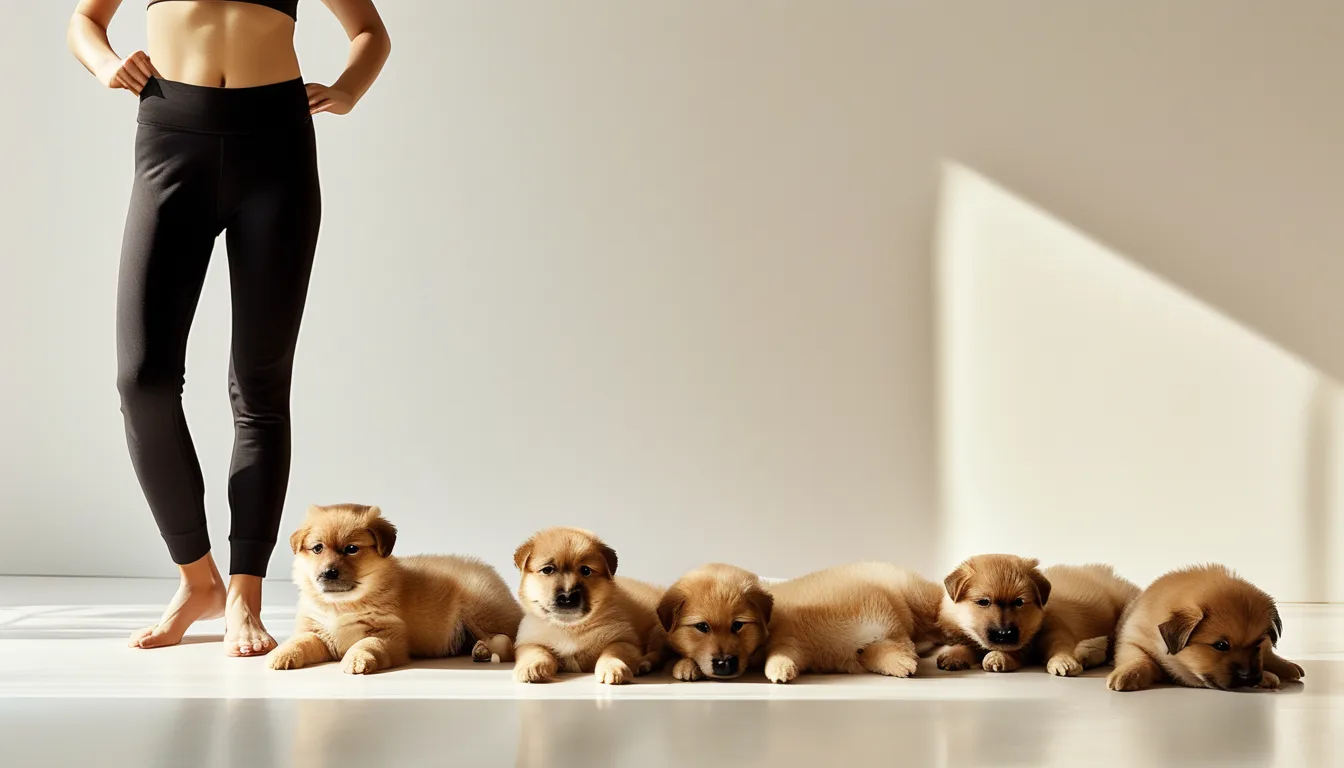
What to Wear for the First Vaccination Round With a Litter
Quick Answer: Dress for restraint, hygiene and one long stationary session. That means a fitted top with no dangling anything, full-length legs you can kneel in for an hour, closed shoes, and a colour light enough to spot a reaction or discharge against. The single most useful choice is a fabric that survives a hot wash, because vaccination day is the day you most want to sanitise everything you wore afterwards.
Vaccination day looks simple on the schedule and takes three hours in practice. Eight puppies, eight sets of paperwork, eight small animals who all need holding still at exactly the wrong moment.
What you wear decides whether hour three is manageable or miserable.
Why is this different from a normal handling day?
Because you are doing three jobs at once, and each one has a clothing requirement.
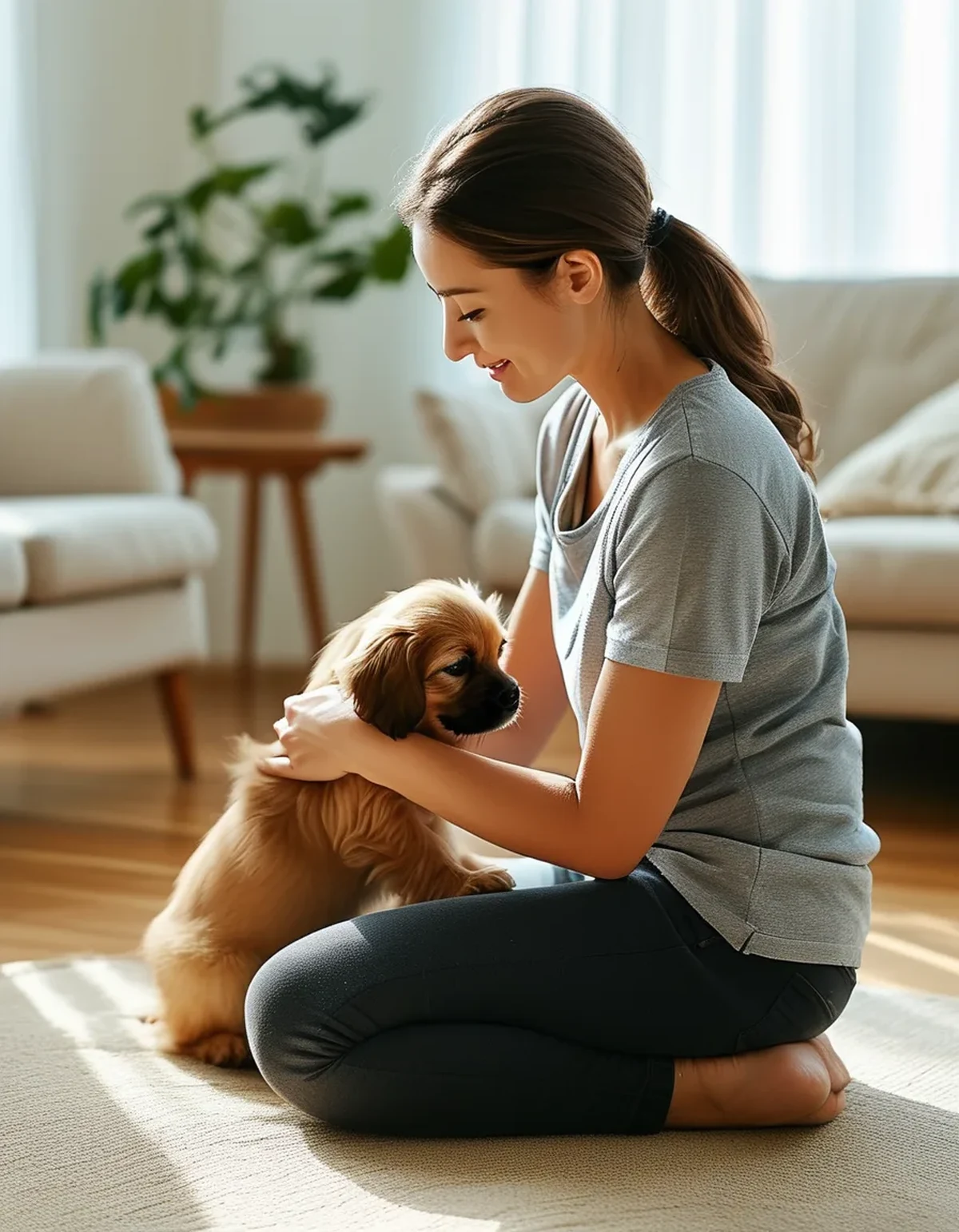
Restraint. You need a stable grip and a stable base. Kneeling, sitting cross-legged, and lifting from the floor repeatedly. Anything that restricts hip range or slides on the floor works against you.
Hygiene. This is a day with needles, disinfectant, and often several animals in sequence. Cross-contamination between littermates matters less than usual since they share a household, but contamination going home with you matters a great deal.
Observation. Post-vaccination monitoring means watching for swelling at the injection site, vomiting, lethargy or facial swelling. You want to be able to see what is on your clothes, because a puppy who vomits or has discharge often does it on the person holding them.
A dark loose outfit fails all three quietly.
What should the top layer be?
Fitted, smooth, washable hot, and free of anything that can be grabbed.
Fitted, because loose sleeves get in the way of a hold and can catch on a syringe tray or a carrier door. Three-quarter or push-up-able sleeves are ideal, since you want forearm coverage for scratches but bare forearms for handwashing between animals.
Smooth-faced synthetic or a dense cotton blend rather than fleece or a loose knit. Puppy claws snag loops, and a snagged sleeve during restraint is how a puppy gets dropped.
No drawstrings, no hood cords, no long necklaces, no dangling earrings. All of these are toys to a puppy and hazards to you.
Light or mid-tone. You need to see fluid, blood and discharge on yourself. This is the opposite of the usual advice to wear dark colours for mess, and it is deliberate.
Hot-wash tolerant. Check the label before the day, not after.
What Nobody Tells You About Vaccination Day Clothing
The first thing: you will be on the floor far longer than you plan. Most people budget for the vet’s table and find that half the day is spent on a floor, in a hallway, or in a carrier-sized space. Knees take the load, and the leggings you can kneel in for ten minutes are not always the ones you can kneel in for ninety.
The second: your pockets will fill up with things you should not be carrying. Record cards, pens, a phone, treats. Every item in an open pocket near a puppy is an item that ends up on the floor. Use one zip pocket, or a small pouch, and nothing else.
The third, and this catches experienced fosterers: change your top before you go home, even if it looks clean. Post-vaccination monitoring means you will be handling these puppies again in a few hours, and the clean shirt you put on for the evening round should not have been in a clinic waiting room.
And the fourth: wear something you will not mind cutting. It is rare, but a puppy caught in a sleeve or a loop is a situation resolved by scissors, and hesitating because it is your favourite top is not a decision you want to make in that moment.
This is general information, not veterinary advice.

How do I handle the shoes and the bottom half?
The parts people give least thought to and use most.
Full-length leggings or trousers. Not shorts. You are kneeling on clinic floors and home floors, and skin contact with either is worth avoiding. Full length also means claws meet fabric rather than shins.
A dense, slightly thicker knit at the knee. Thin leggings on a hard floor for an hour is genuinely painful, and pain makes you rush handling. Some fosterers keep one pair specifically for floor days.
Closed, washable shoes with a grippy sole. Never sandals or open toes. Floors get wet, and a slip while holding a puppy is the worst outcome of the day.
Dedicated shoes that do not go into the whelping area if you are travelling to a clinic. Parvovirus survives on surfaces for a long time, and shoes are the most likely thing to carry it home from a veterinary environment.
A pair kept in the car for clinic trips only is a cheap and effective barrier.
This is general information, not veterinary advice.
What goes in the bag?
Vaccination day is a long day, and the bag saves it:
- A spare top, sealed in a bag. Non-negotiable.
- A small towel for the inevitable.
- Hand sanitiser plus soap, because sanitiser alone is not effective against some relevant pathogens.
- A sealed bag for worn clothing so it does not touch anything else on the way home.
- Nail-trimmed hands and tied-back hair before you leave, not on arrival.
- Snacks and water for you. Three hours of handling on an empty stomach makes everyone worse at their job, including you.
What to leave at home: rings and bracelets, which harbour bacteria and catch on things. A watch you cannot wash. Anything you would be upset to lose.
The whole list fits in a tote and costs almost nothing to assemble once.
FAQ: Vaccination Day Questions, Answered
Should I wear gloves for handling during vaccinations?
For restraint, generally no, since you need tactile feedback to hold a wriggling puppy safely. For cleanup or handling a puppy with any unknown symptom, yes. Follow your vet’s direction on the day.
How should I wash everything afterwards?
Hottest wash the fabric tolerates, separately from household laundry, with a full detergent dose. Shoes get wiped with an appropriate disinfectant and left outside the litter area.
What if a puppy reacts and I need to move fast?
This is exactly why the outfit matters. Nothing dangling, nothing that restricts hip or shoulder range, and closed shoes you can move in. A reaction requiring a fast trip back to the vet is uncommon but it is the scenario you dressed for.
Is it worth having a dedicated clinic outfit?
If you foster regularly, yes. One set that lives in a bag, gets hot-washed after every use, and never doubles as home clothing. It removes a whole category of decision from a busy day.
This is general information, not veterinary advice.
TL;DR:
- Dress for restraint, hygiene and observation, not just comfort.
- Fitted, smooth, light-toned, hot-wash tolerant, with nothing dangling.
- Full-length legs, closed grippy shoes, and a knee-friendly fabric for a long floor day.
- Pack a spare top, soap, and a sealed bag for worn clothing. Change before the evening round.
Vaccination day is one of the few foster days where clothing is genuinely functional equipment. Get it right once, keep the set in a bag, and the day gets to be about the puppies instead of about you.
See It in Motion
Seen here: Super High Waist Embossed Yoga Leggings with Inner Pocket — shop it on bubblelime.com
Keep Reading
This article is for general informational and styling purposes only. Fit, sizing, and product availability may vary.