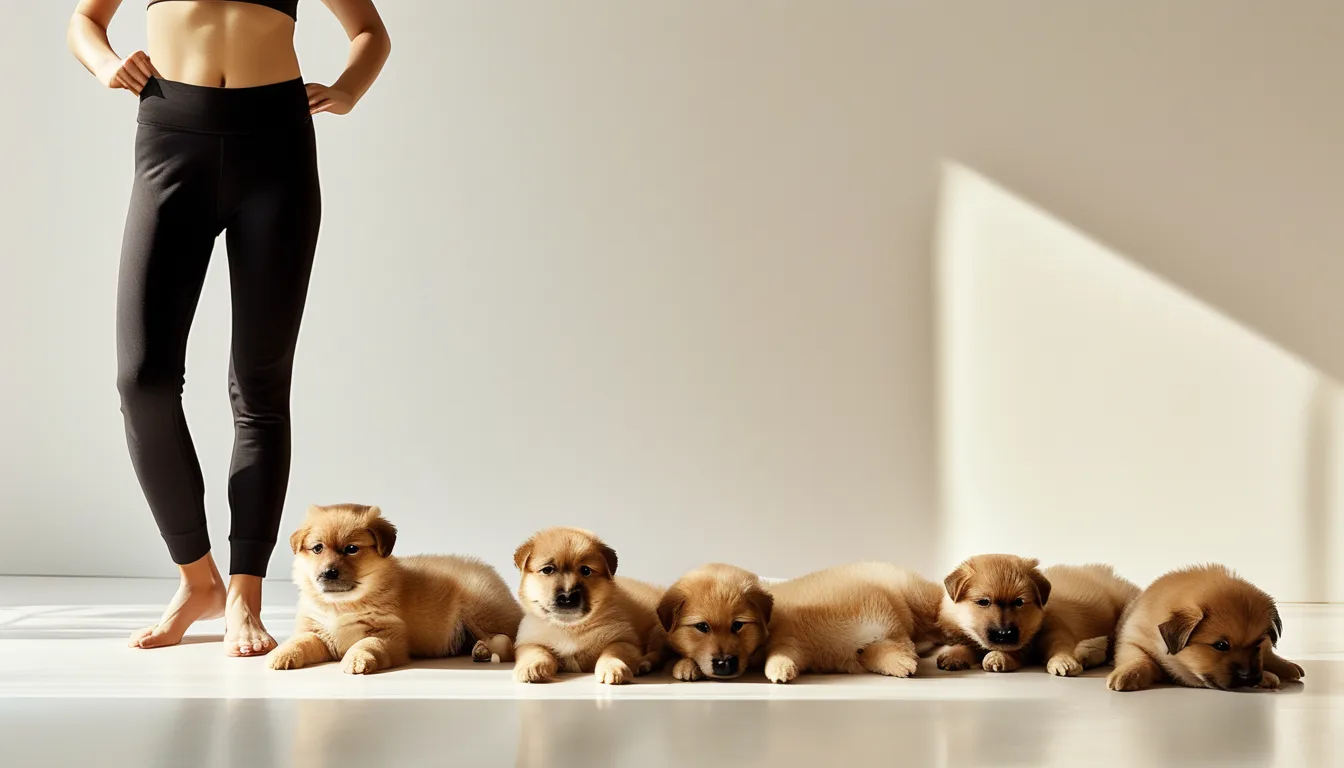
What to Wear for Weaning Week With a Litter
Quick Answer: Weaning week means constant floor work, food on everything, and eight sets of very small claws. The working uniform is fitted, smooth, hot-washable, and quick-drying: full-length leggings or fitted joggers in a tight knit, a smooth fitted top, no loops or dangling anything, and shoes you can hose off. Have at least three complete changes in rotation - not because you are precious, but because you will genuinely need them in a day.
Everything here is chosen for kneeling, wiping, lifting, and being climbed.
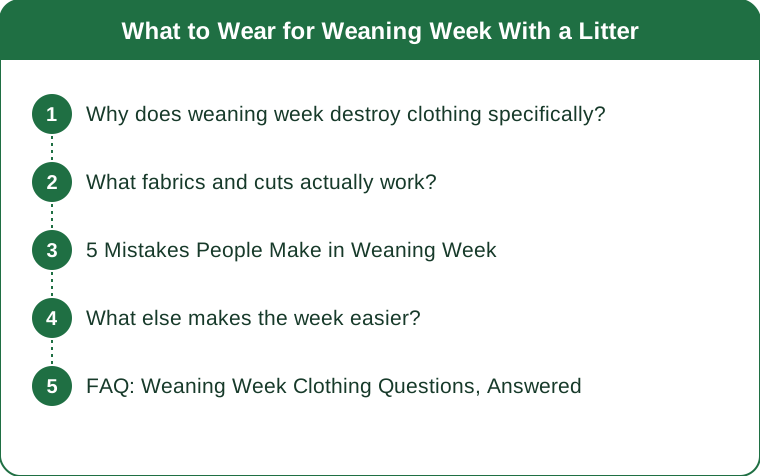
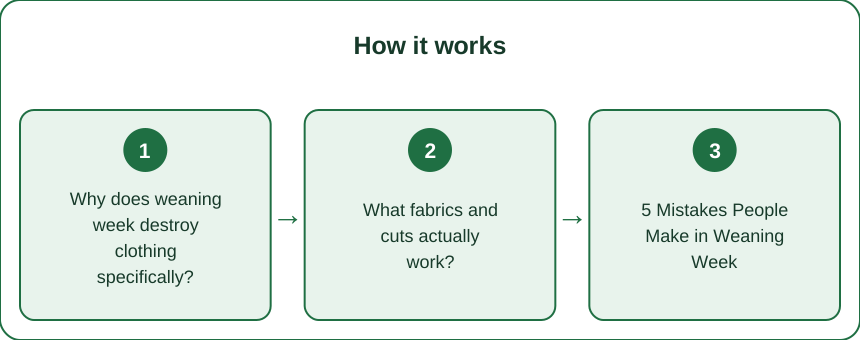
Why does weaning week destroy clothing specifically?
Because four separate things happen at once, all at floor level.
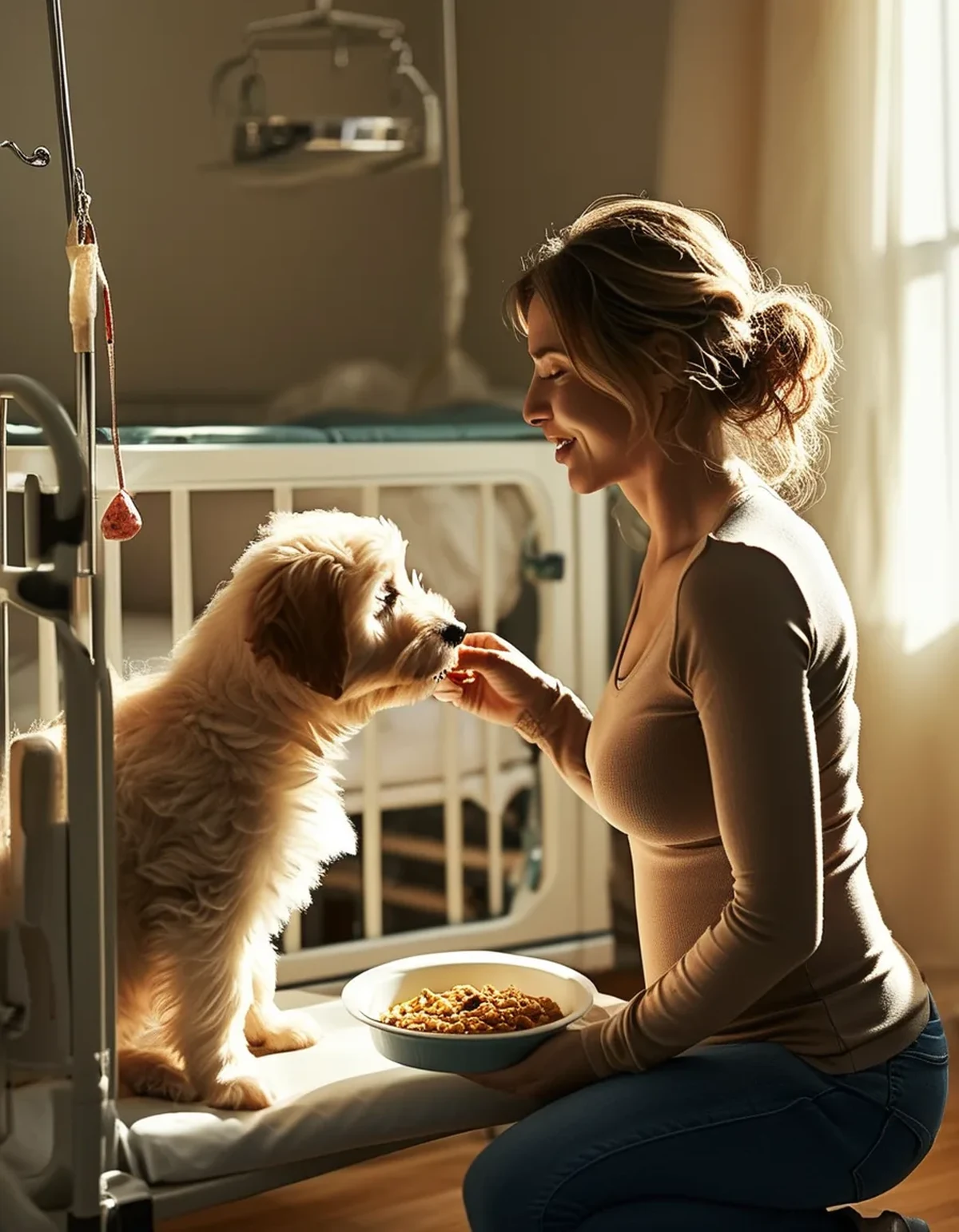
Food goes everywhere. Puppies at four weeks walk through gruel, sit in it, and then walk on you. This is not an occasional accident; it is the mechanism of weaning and it happens at every single meal.
Toileting increases sharply. More solid food means considerably more to clean, and puppies at this stage have no location preference at all.
Claws are at their sharpest relative to their control. Four to six week old puppies climb, and their claws are needle-fine. Anything looped or textured is a hook - and a puppy hanging from your thigh by one claw is distressing for both of you.
You are on the floor for hours. Kneeling, sitting, crouching, and leaning into a pen repeatedly. Knees, hems, and cuffs take the load, and cuffs in particular drag through everything.
The result: most people go through two or three complete outfits a day during weaning week, which is why fabric choice and wash temperature matter more than anything else on the list.
What fabrics and cuts actually work?
Five requirements, in order of how much they matter.
1. Smooth, tight-knit fabric. Performance knits, smooth jersey, and tightly woven cotton twill. Avoid waffle, terry, boucle, chunky ribbing, and loose sweaters - anything with visible loops catches claws.
2. Fitted rather than loose. Loose fabric gives a climbing puppy purchase and drags through food and bedding. Close to the body means nothing hangs into a dish or a mess.
3. Hot-washable and quick-drying. You need to be able to wash at a temperature that handles what the day produced, and have it dry by tomorrow. Nothing dry-clean, nothing delicate, nothing that takes two days on a rack.
4. Full-length and high-rise. Full-length protects your shins during pen work and gives claws less bare skin to find. A high, wide waistband stays put through hours of kneeling and bending - which removes a genuinely constant small irritation.
5. Durable at the knee. Kneeling on a hard utility floor for hours is what wears through fabric first. Fabric with some weight to it lasts several litters where a thin pair lasts one.
On tops: fitted, short or three-quarter sleeve, smooth. Long loose sleeves drag through dishes; three-quarter sleeves are the practical compromise for a cool room. No hoods with cords, no long necklaces, no dangling anything.

5 Mistakes People Make in Weaning Week
1. Wearing knitwear because the room is cool. Whelping rooms are kept warm for the puppies, so you rarely need real insulation - and a knitted jumper is the single worst fabric choice available around claws. A smooth long-sleeve layer does the same job without the snagging.
2. Having only two outfits in rotation. You will change more often than you expect. Three complete sets minimum, so one can be in the wash, one drying, and one on you.
3. Wearing outdoor shoes indoors, or socks only. Dedicated washable indoor shoes - crocs-style or wipeable trainers - keep the whelping area cleaner and protect your feet from claws and spilled food. Socks alone get wet within an hour.
4. Forgetting hair and hands. Hair tied back and off the shoulders, nails short, no rings. A puppy claw and a ring is a bad combination for both of you, and long hair in a whelping box is a hazard.
5. Dressing in white or black. White shows everything and black shows every hair. Mid-tones and heathered fabrics hide the most, which matters when you have to answer the door mid-session.
What else makes the week easier?
The practical setup around the clothing, since the two go together.
Set up a changing station. Clean clothes and a laundry basket immediately outside the whelping room. Changing at the door rather than walking through the house keeps the mess contained and makes changing frequently actually feasible.
An apron over your clothes for feed times specifically. A wipeable apron takes the worst of the gruel and can be rinsed in seconds. This one item can halve the number of full changes you need in a day.
Keep a towel over your shoulder permanently. For hands, for puppies, for surfaces. It is faster than reaching for kitchen roll every time and it means you always have something dry within reach.
Have real pockets, or a small apron with them. Phone, timer, notepad, a pen for the weight chart. Nothing that needs to be put down on a surface you will then have to clean.
And plan the laundry. Weaning week doubles your washing. Run a load every evening rather than letting it accumulate, and keep towels and clothing loads separate.
Autumn note: as the weather cools, the whelping room stays warm while the rest of the house does not, which means you will be moving between two very different temperatures constantly. A light layer you can pull on at the door - not a knitted one - handles this without adding anything the puppies can catch.
And protect your knees properly. Hours of kneeling on a hard floor is genuinely hard on the joints. A foam kneeling pad costs very little and is the piece of equipment experienced breeders mention most often and newcomers buy last.
FAQ: Weaning Week Clothing Questions, Answered
What fabric is safest around puppy claws?
Tightly knit smooth fabrics - performance knits, smooth jersey, tight-woven cotton. Avoid anything with visible loops: waffle, terry, chunky ribbing, and knitwear.
How many outfit changes should I plan for?
At least three complete sets in rotation during weaning week. Most people change two or three times a day, and an apron for feed times reduces that noticeably.
Should I wear shoes in the whelping area?
Dedicated washable indoor shoes are ideal - they protect your feet, keep the area cleaner than outdoor shoes, and are far better than socks, which get wet immediately.
How do I stop my clothes from smelling even after washing?
Wash at the highest temperature the fabric allows, avoid overloading the machine, and dry fully. An occasional white vinegar rinse helps with persistent odour, and rotating enough sets means nothing sits damp in a basket.
What is the one item people forget?
A foam kneeling pad. Hours on a hard floor is the thing experienced breeders protect against and newcomers discover the hard way.
TL;DR:
- Weaning week is floor work, food, toileting, and sharp claws - all at once, all at ground level.
- Wear smooth tight-knit fabrics, fitted rather than loose, full-length, high-rise, and durable at the knee. No loops, no dangling anything.
- Keep three complete sets in rotation, use a wipeable apron for feed times, and set up a changing station at the door.
- Add washable indoor shoes, hair tied back, no rings, mid-tone colours, and a foam kneeling pad.
None of this is about looking a particular way - it is about removing friction from the week that has the most of it. The people who find weaning manageable are almost always the ones whose laundry system and kneeling pad were sorted out before the puppies needed them.
Keep Reading
This article is for general informational and styling purposes only. Fit, sizing, and product availability may vary.